
บทความนี้มีเฉพาะภาษาอังกฤษ
Resilience in Turbulent Times: 9 Micro-Resilience Techniques for Daily Life
The Psychological Impact of Global Instability
We’re all living through some difficult times. I sometimes feel like I’m on a long-haul flight going through serious turbulence, and I wish it were over! There are multiple wars, rapid change with AI, and political instability all over the world. The world feels unstable and chaotic, which is stressful and frightening. We can begin to feel spaced out or disoriented by what’s happening around. You might even feel like your own life is falling apart.
Why Resilience Matters in Uncertain Times
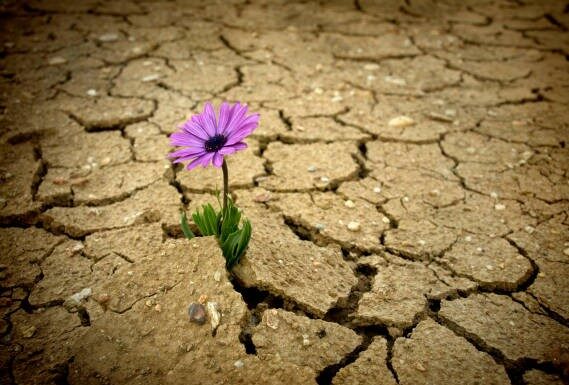
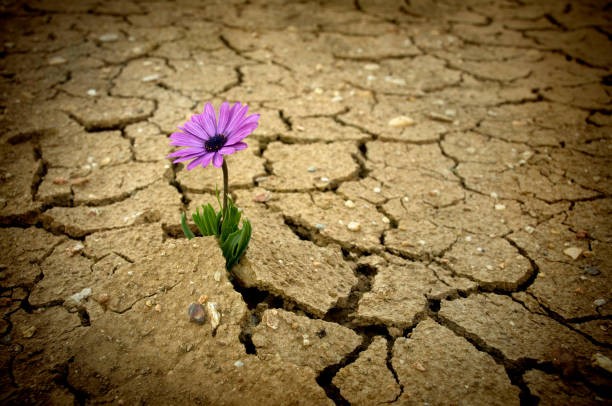
During difficult times like this, it’s important to practice being resilient. Resilience and self-compassion are psychological survival skills which can help carry us through difficult times. You can think of it as keeping your inner world solid when the outer world feels like it’s cracking. Resilience can be a way of generating real, durable hope. Please know that the capacity for resilience is built into all of us. We have the resources that form resilience within us as part of being human. All we need to do is to activate those inner resources to build our resilience.
Resilience and Self-Compassion as Survival Skills
So what is the kind of resilience and self-compassion that can help us during times like this? It’s a grounded, practical approach that each of us can practice in the present moment. Because that is exactly how you’re going to get through this: moment by moment, hour by hour and day by day. It’s not about pretending things are fine. Not even remotely. It’s about harnessing the deep profound resources that each of us has within us as human being and pointing those resources towards grounded presence, clear perspective, steady connection and purpose-guided action. We can practice activating our inner resources in the flow of daily life to build our resilience, moment by moment.
9 Micro-Resilience Techniques to Practice Daily
-
Come back to the Present Moment, here and now
The present moment is where our resilience can manifest. Our human minds so easily get lost in negative predictions, fearful anticipation or rumination. It’s so valuable to be able to bring our mind back to here and now. Just take a few conscious breaths and feel your feet on the ground or in your shoes. Just feel that solid contact. When you can feel your feet, your mind has come back to the present moment. Rather than being lost in the content of the news, shift to noticing the impact on your mind and body. Are you tense? Is your heart racing? This noticing interrupts the stress spiral and reconnects you with your inner resources. Just by doing this, you may already begin to feel more grounded and calm.
-
Name the reality AND name your agency
Authentic and durable resilience begins with honesty. You don’t need to minimize what’s happening in the world or force yourself to be positive. Start by acknowledging the truth of the moment: “This is a frightening, unstable time and I feel stressed” or “The world is so uncertain and I’m frightened.” Naming reality reduces internal chaos; it tells your nervous system, I see what’s happening. It also emphasizes that your feeling isn’t some form of pathology, your feeling is part of a broader, collective distress that so many people are feeling.
But don’t stop there. Pair this with a reminder of your agency: “And I still have choices about how I show up today.” Remind yourself that you can still choose how you’re going to face reality in your own life, right here, right now.
This simple two‑part move keeps you from collapsing into helplessness. It restores a sense of direction in the face of overwhelm, even if the direction is small. It creates a space where resilience can grow.
-
Shift your focus to your world at a human scale – your sphere of control
When global events, rapid changes and uncertainty feel overwhelming, your nervous system can’t process it. The solution is to narrow and sharpen your focus to something manageable — your own world- your life as you’re living it today. This begins by asking yourself “What’s under my control today?” or “What are the things that I can influence in my own life?”
When you feel really stressed or dismayed, a powerful practice here is the Three‑Foot Radius: Put down your device and ask yourself “What’s one thing within three feet of me that I can influence right now?” This is seeing that you have your own sphere within which you can act and feel the results.
Try turning away from news and social media. Reset yourself to your sphere of control with small actions like getting up and stretching, having a glass of water, opening a window, sending a message to a friend, tidying up a little, or whatever small action appeals to you right now. Maybe by working on the smallest, simplest item on your to-do list. Taking action, no matter how small, fosters your empowered resilience. It signals that you are not powerless and still have agency.
-
Anchor yourself in values, not vibes
In these chaotic times, our emotions are unstable. So many people are feeling dismayed and overwhelmed and spreading that energy through social media. These emotions are up and down, constantly rising and falling. Your core values, on the other hand, are stable. The things that matter to you don’t depend on mood or circumstance. Your core values reflect how you want to face today. Your core values answer the question “What do I want to stand for when facing my life today?” So, your core values give you a way to orient yourself when everything else feels disorienting. They connect you with purpose.
Try choosing one value for today — steadiness, kindness, clarity, courage, presence — and ask: “What’s one tiny action that expresses this value today?” Not a big action. Not a world‑fixing action. Just one small expression of who you want to be. This affirms your agency and builds your resilience.
-
Create a micro‑ritual that signals: ‘I’m still here’
Humans survive chaos through routine and ritual. Humans embrace rituals in every era and every culture. Rituals are frequently religious, but they don’t have to be. You can create your own rituals that help ground you into your daily life. You may already have rituals, like your morning coffee, that help you feel a sense of regularity and stability!
I don’t mean elaborate ceremonies — just tiny, repeatable acts that harness your human spirit by anchoring you and giving you a breathing space in the midst of the storm around you. A micro‑ritual can be lighting a candle, smelling an essential oil, touching your heart for one breath, writing a single sentence in a notebook, or stepping outside to notice the sky.
Your ritual isn’t about productivity or self‑improvement. The ritual is a signal to yourself: “Even in all this, I’m still here and I can act.”
-
Feel yourself as part of humanity, not separate from it
When the world feels like it’s falling apart, isolation intensifies the pain. Build resilience by recognizing how people throughout history have lived through impossible moments. Humans have lived through change, chaos and collapse. They adapted, endured, and rebuilt. We’re all part of that lineage. Practice seeing yourself as part of this flow of humanity. Remember that humans are resilient not because we can avoid hardships, but because we face them together — across time, across cultures, across generations.
-
Use self‑compassion as fuel
In chaotic times, self‑compassion is about creating supportive internal conditions that allow you to keep functioning. Self-compassion helps you to recognize yourself as human and your experience – all your feelings and judgments- as part of being human. When you cultivate self-compassion, you accept yourself as a human being living through chaotic times rather than exhausting yourself with harsh self-criticism and self-blame.
Try speaking to yourself in a grounded, clear self‑compassionate voice: “I’m not weak for struggling. I’m human. I’m not a machine. And I’m choosing to keep going with as much steadiness as I can.” See if you can encourage yourself with kindness to engage with small steps and little actions that move you forward through each day. This kind of self -compassion builds enduring resilience and helps you to act as a resource for yourself when facing these difficult times.
-
Make Time To Connect with Others
As humans being, our bodies and nervous systems are wired for coregulation. What does that mean? It means that harmonious connection calms and soothes us. When we’re calmer, our natural coping capacity manifest and expands. So, connecting can activate our resilience and buffer us from stress. At the same time, our relationships ground us and reinforce our sense of stable identity- they remind us who we are. This helps us to fee more solid and stable while the world is moving all around us.
So, make some time to connect and talk with someone who shares your values or have an interaction with people who energize you.
-
Practice Building Hope
You don’t need to feel hopeful to practice hope. Practicing hope isn’t about pretending everything is fine. It’s about building the inner conditions that help you keep moving, keep caring, and keep imagining possibilities even when the world feels heavy. Think of hope as a practice, not a mood — something you strengthen the way you strengthen a muscle. Hope requires uncertainty- you can’t feel hopeful about something you’re certain about. Hope can also coexist with fear or overwhelm- you can hope for something you’re afraid won’t happen. In fact, that might be the best time for hope!
Hope is a powerful component of resilience- it gives the actions we’re taking today a sense of meaning and purpose that disappears when we lose hope. There are many ways you can practice and grow your hope. To practice hope, try to notice what’s working- focus on your sphere of control and name one thing that went well today, one person who acted with kindness, one moment of beauty. Hope grows from agency and small actions so acknowledge whatever steps you’ve taken today. Hope grows from self-compassion, so try treating yourself like someone worth protecting. Hope grows from staying aligned with your values so reconnect to your intention to be guided by what’s important to you. Hope is frequently a collective emotion so connecting with other people can help build hope, too. Hope is built, not found. You can build your hope in little steps through little actions.
When to Seek Support
If you’re feeling overwhelmed, need some support in a safe, nonjudgmental space, or feeling ready to grow and progress, please contact the mental health professionals at PSI. We’ve been serving communities across Bangkok and Thailand since 2002 with counseling and psychotherapy for children, teens, adults and couples. Available in person in Bangkok or online across Thailand and regionally. We’re ready to provide effective counseling and therapy to meet your needs.
Benjamin Weinstein, PhD
Clinical Psychologist
Certified Teacher of Mindful Self-Compassion


